


Twice a day, Jersey changes shape. On the biggest spring tides the sea withdraws several kilometres to the south-east and the island gains close to a quarter of its surface, before all of it is covered again within a few hours. For a shore angler the consequence is simple: a mark can only be fished during a window of a few hours.
That is what makes shore fishing in Jersey as productive as it is technical. Reading those windows, knowing the Jersey rules, picking the right setup for the three species that fill most sessions: that is what the island comes down to. If you build your own rods, the saltwater predator blanks cover all three profiles described here.
Jersey has one of the greatest tidal ranges in the world, up to roughly twelve metres on the big spring tides. Only the Bay of Fundy in Canada and the Severn Estuary go higher, and the Bay of Mont-Saint-Michel plays in the same league. Most English coasts, by comparison, sit between two and five metres.
For your session, that translates into three things.
- A rock mark is rarely fishable for more than two or three hours. After that it is either dry or under several metres of water. The same rock that produces bass on the mid flood gives nothing two hours later.
- The current works for you. On spring tides the water accelerates through the gullies and concentrates baitfish on fixed points. Finding one of those funnels at low water pays better than searching at random on a full tide.
- The flood is fast, and on parts of the south coast the water fills the pools quicker than you can cross them. On a reef platform, your way back is worked out before you start fishing.
In practice, plan every session around the tide tables and go and scout at low water. Nothing like the Mediterranean, where the range is nil and everything is played out by eye.
Jersey is a British Crown Dependency and is not part of the European Union. The European registration requirements for recreational sea anglers, in force since 2026, therefore do not apply here. Jersey's own rules do, and they come down to a handful of points.
- No permit is required for recreational rod and line fishing from the shore.
- Bass carries a bag limit of two fish per angler per day, from 1 April to 31 January. Outside that period, bass fishing is strictly catch and release.
- Portelet Bay has been a No Take Zone since May 2022: all forms of fishing are banned there. Locate it on a map before you set off.
- Minimum landing sizes apply to all species, and both beach-set nets and ground lines are prohibited.
- If you fish on foot at low water, put every rock you turn back in its original position. The habitat under those boulders takes years to recover.
These measures change from one season to the next. Check where they stand on the Government of Jersey website in the days before you travel.
Bass follow the tide more closely than any other species on the island. They move up with the water onto the uncovered platforms to work the pools, then drop back and hold in the gullies. The two hours after the start of the flood are often the most productive of the day.
The tackle constraint comes from distance and terrain. You fish from rock platforms, sometimes high up, with line rubbing on stone. You need to cast far, lift the line clear of the rock and turn a fish that heads straight for cover.
- Rod of 2.70 to 3.00 m rated 10 to 40 g, semi-parabolic action to absorb runs taken at close quarters.
- Reel in size 3000 to 4000, PE 1.0 to 1.2 braid and a fluorocarbon leader in 0.30 to 0.35 mm.
- On lures, a sinking jerkbait, a shallow minnow and a weightless soft plastic cover most situations.
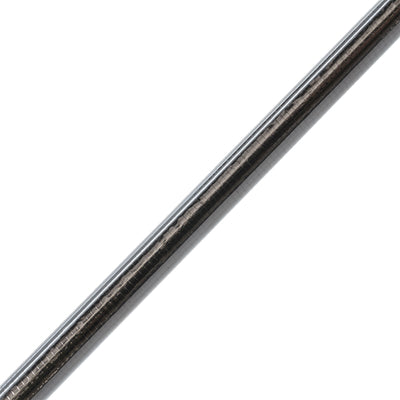
The TR 96 Super Seabass blank fits that brief: 2.90 m rated 8 to 28 g. The length is enough to hold the line above the rocks, and it stays fine enough to work a minnow through a whole tide without fatigue.
Other options sit in the range of blanks for bass, and the models suited to these marks in the bass lures.
Pollack hold on rocky drop-offs and along the edge of kelp beds, often in two to eight metres of water within casting range. They hunt by rising onto the lure, which makes the take decisive but means you have to keep contact through the drop.
This is shad fishing on 10 to 30 g jig heads, retrieved slowly above the kelp. You need to feel the moment the lure brushes the fronds so you can lift before it snags, so sensitivity matters more than anything else.
- Rod of 2.40 to 2.60 m rated 10 to 40 g, fast action, with a resonant blank that transmits contact.
- Reel in size 3000, PE 1.0 braid and a fluorocarbon leader in 0.30 mm, shorter than for bass.
- Shads of 10 to 14 cm in natural colours, plus a few jigs for the deeper marks.
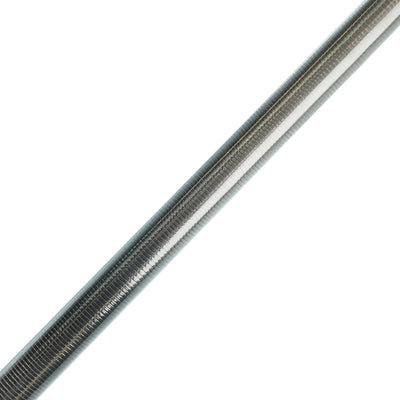
The SJ 804-1 Delta suits this well. Its pronounced taper gives it a resonance that helps you read the bottom at range.
The other references sit in the blanks for pollack.
Ballan wrasse is probably the most underrated species in Jersey, and the best option on windy days when bass are not playing. It lives in the rock, eats crabs, and its defence is to dive straight back into the hole it came from. You have one second to stop it.
The tackle therefore has nothing in common with the two previous styles: this calls for power rather than finesse.
- Short, powerful rod, 2.40 to 2.60 m rated 15 to 50 g, with reserve in the butt.
- PE 1.5 to 2.0 braid straight through, or with a very short leader in 0.40 to 0.50 mm.
- Crab imitations or creature baits rigged Texas style on a heavy-gauge hook, worked vertically along the fissures.
The PPS 86 H-2 is short and reactive, with the power needed to lift a fish off the rock on the take.
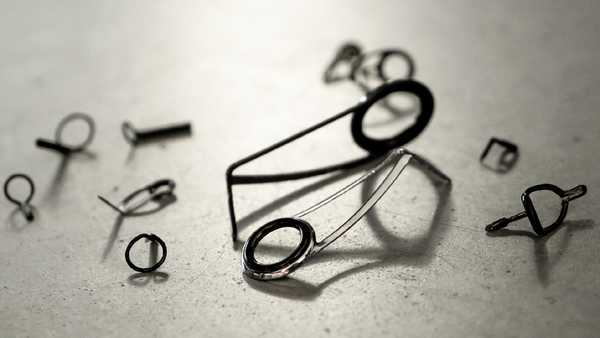
Across all three styles, salt and abrasion on granite wear tackle quickly, which is where marine stainless or titanium guides earn their place. The guide packs save you working out the spacing yourself.
One last point, valid anywhere on the island: keep your tide times available offline and tell someone which stretch you are heading to before you walk out onto a reef platform. For anyone who would rather travel with a ready-to-fish setup, the built bass rods cover most of these situations.





Comments
0Log in to leave a comment.
Log in