


Amberjack and dentex hold on the same structure in the Mediterranean: pinnacles — those isolated rocky heads that rise abruptly from the seabed —, drop-offs and current-swept wrecks. They don't respond to the same triggers, though, and they aren't fished the same way.
Two techniques genuinely dominate here. Slow jigging first, which outperforms conventional vertical jigging because a jig that glides, tips over and then flutters back down triggers fish that refuse a fast retrieve. Then slow trolling, which remains the way the vast majority of Mediterranean dentex are caught. This article covers the tackle for both.
In slow jigging, four components decide the outcome: the blank, the reel, the line system and the hook rig. Slow trolling follows a different logic, covered in section 05. Three complete setups follow, built from our ranges of slow jigging blanks and trolling blanks.
Dentex is a wary, territorial fish that hunts in contact with rocky ground. In summer it often works between 30 and 60 metres, on posidonia plateaus broken up by rocky rises. In winter it drops considerably deeper, sometimes beyond 100 metres. It's a fish that refuses a crude presentation: pure slow pitch and long fall, with marked pauses and a long descent, are what put it at ease.
Amberjack lives on the same structure but responds to energy. It holds on pinnacles, shallow rises and wrecks swept by current, and it's at its most active in late summer and early autumn, at dawn and dusk. When it's hunting, a sharper high pitch triggers it better than a slow action. When it's present but passive, slow pitch takes the advantage back.
Read the structure before choosing your jig weight
In the Mediterranean, topography dictates everything. The most consistent ground is isolated pinnacles that rise sharply, typically from 60 metres of water up to a head at 10 or 15 metres, rocky rubble at the foot of a drop-off, and wrecks sitting on sand. Amberjack patrols the slope and the water above the pinnacle head; dentex holds lower, tight to the break and the overhangs.
That reading sets your jig weight before the jig ever touches the water. On a pinnacle head at 20 metres, a light jig is enough and has time to glide. On the same pinnacle, drifting down towards the base at 70 metres in current, you often need to double the weight to stay vertical. A properly used sounder and well-logged marks are worth more than any tackle purchase.
That reading also dictates the technique. A heavily broken pinnacle, full of breaks and overhangs, is jigging ground: you can't run a trolled bait along the bottom there without snagging everything. A regular plateau or a corridor at constant depth, by contrast, is slow trolling ground, where the bait can work in the last few metres above the bottom over hundreds of metres.
The consequence for tackle is direct: one setup won't cover both situations. You work a 100 gram jig on a plateau at 40 metres, then a 250 gram jig on a pinnacle at 90 metres in current, against a fish capable of taking you into the rock in three seconds.
A slow jigging rod generally sits between 6 and 6'6", or 1.80 to 2.00 metres. That length is enough to generate the amplitude that makes the jig work, without wearing you out over a full day of pitching. Any longer and the action becomes imprecise and energy-hungry.
What sets these blanks apart is the combination of an ultra-progressive parabolic action and high resilience. Unlike a conventional jigging or traction rod, there's no tip action: the blank works over its whole length, loads, then releases to catapult the jig sideways. That rebound is what creates the glide you're after. The butt then takes over with a rounded power reserve that cushions head shakes without ever locking up.
Be careful how you read the weight ratings. The stated power is the optimal working weight, not the maximum the blank will take: a blank rated 70-175 grams handles heavier jigs without difficulty, simply with a less lively action. To understand how our references are coded, our article on our blank designations explains the system.
The all-round blank for dentex and mid-size amberjack
The PPS SLJ 66-175 covers the range used most in the Mediterranean: jigs from 70 to 175 grams, depths to around 80 metres, moderate current. It's the blank that handles dentex on their plateaus and amberjack of average size. Our field testers covered it in detail in a full review of the SLJ 66-175.
The blank for big amberjack on deep pinnacles
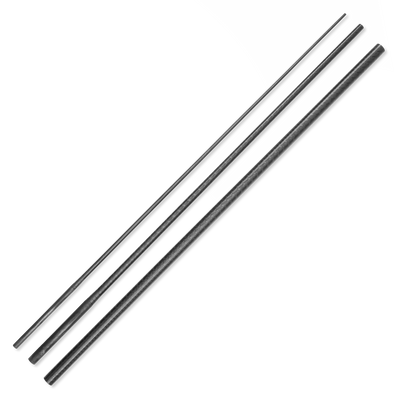
When you move up to 250 or 300 gram jigs, in 100 metres of water and in current, you need a different tool. The TSLJ 66-300-3 handles those weights and keeps the power reserve you need to stand up to a big amberjack right above the rock, where the fight is decided in the first ten seconds. It's also multi-piece, which simplifies transport when your marks are on an island or several hours' drive away.
Slow jigging is done with a baitcasting reel. Thumb on the spool gives you direct control of the descent and lets you feel the take on the drop, which is when most hits happen. A quality spinning reel works, but you lose that contact during the most productive phase.
The most common mistake is going too small. A size 150 low-profile, perfectly at home in light jigging or tenya, comes up short on amberjack and dentex: capacity leaves no margin when a fish takes drag in 80 metres of water, and both the frame and the drag reach their limits quickly. Aim for a size 200 to 300 low-profile, or a small narrow-spool conventional.
Three criteria matter next:
- A gear ratio of 6.8:1 or higher: in 100 metres of water, a slow ratio turns every retrieve into a chore. A single long handle gives more torque than a double during the fight.
- At least 300 metres of braid capacity in the diameter you fish: on a deep pinnacle you need margin to absorb an amberjack's first run.
- A progressive drag and a narrow spool: line lays evenly and the drag starts up without jerking, which protects your connection knot.
Our selection is in baitcasting reels, and the choice of casting reel seat then follows the foot of the model you pick.
Braid transmits the jig's vibration and tells you what the bottom is made of. For amberjack and dentex, PE 1.5 to PE 3 braid covers almost every situation: PE 1.5 to 2 for dentex over mid-depth ground, PE 2.5 to 3 as soon as you target sizeable amberjack or the current picks up. Go for 8-strand, which keeps strength at reduced diameter and cuts better through current. Metre-marked braid makes it easier to get back to the productive layer. Our selection is in lines and braids.
Fluorocarbon leader is sized as much by the rock as by the fish: two to three metres is enough, joined with a well-cinched FG knot that runs through the guides without catching. Ring quality matters on these fisheries, and our comparison of Alconite, SiC and Torzite explains what you gain in heat dissipation.
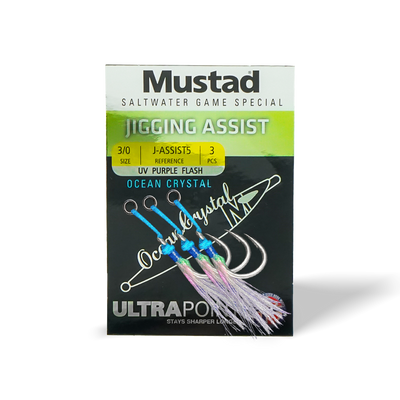
On hook rigging, the reference slow jigging setup is symmetrical: twin assists at the head and twin assists at the tail, mounted on solid or split rings, with the hooks facing each other without crossing. It's the ideal rig for dentex, which often attacks the jig mid-body or on the drop. For amberjack, or in very snaggy ground, front-only twin assists reduce the risk of hanging up in the rock.
Hook size follows the jig: 1/0 to 3/0 on light and medium weights, 5/0 as soon as you move up to heavy jigs for amberjack.
It needs saying plainly: in the Mediterranean, most dentex are not caught on a jig but slow trolling. It's the most widely practised technique for this fish, and slow jigging complements it rather than replacing it.
The principle is simple: present a bait at 1.5 to 2.5 knots, right along the bottom, over rocky ground with consistent relief. The bait needs to run in the very last few metres above the seabed, which calls for corridors at constant depth rather than abrupt breaks. Squid remains by far the best dentex bait, live or dead, ahead of garfish, mullet and saddled bream.
Two ways to hold depth. The downrigger, which places the bait to the metre using a one-kilo weight and a release clip, and which remains the most precise option beyond 60 metres. Or the inline lead, simpler and far more widespread: a 400 to 600 gram lead, with 500 grams as the reference, rigged on the main line.
The blank for slow trolling
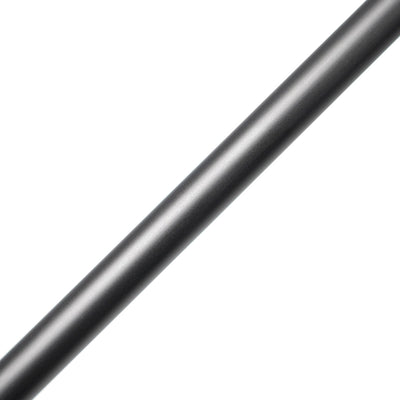
The PPS 66 XXH is our reference for this fishery. One-piece, tapered, with a fibreglass tip: exactly the profile you want. The glass tip absorbs the constant load of the lead without tiring, soaks up boat movement and lets the dentex take the squid without feeling resistance — precisely what a stiff carbon tip won't forgive on a fish this wary. The tapered body takes over behind it and provides the power to lift a fish that dives back into the rock.
Don't stop at the 50-150 gram rating: as with slow jigging blanks, that's a lure working range, not a load limit. Trolling, this blank pulls a 500 gram lead without difficulty.
The reel logic changes here: capacity and torque matter more than gear ratio. A conventional or small trolling reel in size 300 to 400, loaded with metre-marked braid or monofilament, lets you count the line you've let out and repeat a pass that worked. The rest of the range is in our trolling blanks.
- Slow jigging, dentex and mid-size amberjack: 70-175 gram blank, size 200 low-profile baitcaster with a fast ratio, PE 1.5 to 2 on 300 metres, fluorocarbon leader, 80 to 150 gram jigs rigged 1/0 or 3/0. Depths of 30 to 80 metres, light to moderate current.
- Slow jigging, amberjack on a deep pinnacle: 100-300 gram blank, size 300 baitcaster with high capacity and a strong drag, PE 2.5 to 3, heavy leader, 180 to 300 gram jigs rigged 5/0. Depths of 80 to 130 metres, strong current.
- Slow trolling, dentex: PPS 66 XXH blank with a glass tip, high-capacity reel with metre-marked line, 500 gram lead or downrigger, long fluorocarbon leader, live or dead squid. Speed of 1.5 to 2.5 knots, bait in the last few metres above the bottom.
If you're only building one to start with, it depends on your target. For amberjack, the first setup covers the majority of Mediterranean trips. For dentex, the third is the one that will put the most fish in the boat, with jigging then widening your options on pinnacles too broken up to troll.
Balance between components matters more than the isolated performance of any one of them: a well-matched blank, on a coherent reel and a line system of the right diameter, will get you more takes than a mismatched high-end setup. Browse our ranges of slow jigging blanks and trolling blanks to build your own.





Comments
0Log in to leave a comment.
Log in