


Fishing for pike in winter comes with specific challenges you need to understand to make your sessions count. In the cold season, the pike's behaviour changes: its metabolism slows down as the water temperature drops. It becomes less active, digests more slowly and feeds over shorter windows. Yet winter is also the perfect time to land truly big fish, for anyone who knows how to adapt. In this complete guide, we will look at where to find pike in winter, how the cold influences their behaviour, what gear to use (rods, reels, lures, and so on), along with the best techniques and practical tips to tip the odds in your favour. The goal: to give you every key you need to target pike effectively in winter, even as a beginner.
In winter, pike try to offset the cold by seeking out more comfortable water zones that are rich in prey. As a rule, they hold deeper as soon as the water cools below a certain threshold, often around 4 metres down. There, the water stays slightly warmer and more stable, offering a welcome few extra degrees. Even in shallow venues, you will find pike close to the bottom, because that is where they sit when they are inactive. Deep holes and drop-offs (breaks in the slope) are therefore key spots to explore first in winter. For example, if a pond or river has a deep hole or a deep run, that is often where pike will gather when the water is icy.
Do not overlook milder spells either: shallow zones can spring pleasant surprises during the “warmest” hours of the day. In the middle of the day, a ray of sunshine can slightly warm the margins or the top of shallow flats, prompting a few pike to leave the bottom briefly to hunt. So around midday or in the early afternoon on sunny days, it can pay to work zones that are usually unproductive early in the morning. In fact, in winter the 11 am to 3 pm window is often the best time to try your luck, because that is when the sun is highest and pike frequently enjoy a peak of activity.
Pike also like calm, oxygen-rich zones. On rivers, during high winter flows (floods), they retreat into backwaters, current breaks and the mouths or entrances of harbour canals where the flow is weak. On lakes, winter rains bring in slightly warmer, coloured water into bays or at the mouths of tributaries, which draws baitfish and, as a result, the pike of the area. These fresh, oxygenated inflows thus become genuine hotspots in winter, provided you fish just after the water rises and not while the vegetation is fully decaying.
Finally, take the state of the weed beds into account. In autumn, dense weed beds die and decompose, releasing organic matter. During the active decay phase, water quality can drop (tinted water, reduced oxygen), which has a negative effect on pike activity. So avoid zones where everything is decomposing at that moment. On the other hand, once most of the weed has died off, these zones clear up and become more accessible. The edges of gradually decaying weed beds, the fringes of faded lily pads and so on can then become interesting again: baitfish sometimes gather there and pike take advantage of the lack of cover to hunt more easily. To sum up, the best winter spots include: deep holes, marked drop-offs, zones sheltered from the current on rivers, mouths and water inflows, and the fringes of dying weed beds (outside the peak of decay).
Is it better to fish a pond, a river or a lake?
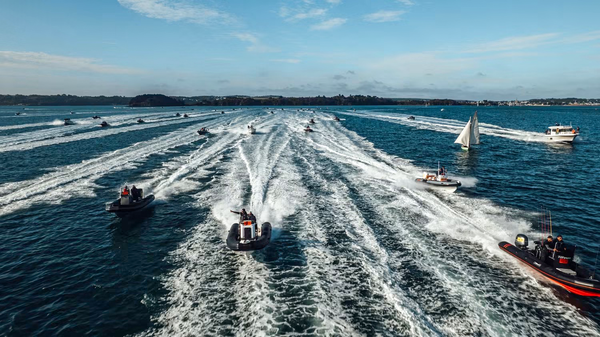
There is no bad venue for winter pike fishing, but each has its strengths and its challenges. Large lakes offer plenty of depth and often hold the biggest fish. In return, pike are scattered there and often suspended near shoals of baitfish, sometimes hard to locate without live sonar. If you have a boat or an equipped float tube, a deep lake can be very productive in winter, provided you find the right depth (often between 3 and 8+ metres) and target zones rich in silver fish (thermocline, drop-offs near waiting shoals of roach and bream). Second-category rivers, for their part, see their pike gather in calm zones in winter: confluences, low-current holes, behind obstacles and so on. The advantage on a river is that the current naturally concentrates fish in the slack water, which can make locating them easier (for instance, in full flood every pike will be in the quiet folds). Even a small river with a few deep eddies can hold pike well in winter, as long as the water is not too clear and iced over on the surface. Shallow ponds, finally, can see their water cool very quickly. They are easier to cover when prospecting, but pike activity there is very dependent on the weather: a ray of sun at midday can trigger a short peak of activity, while long spells of frost can almost shut the fishing down. In short, fish the venue you have available by adapting your approach: on a lake you will often have to search deep and perhaps vertically, on a river you will have to focus on the calm spots and make the most of the slightest mild spell or favourable flood, and on a pond you will have to watch very closely the moments and corners that warm up a little.
The cold does not stop a pike of over a metre, nor a motivated angler, but it does demand suitable gear to cast big lures, feel subtle bites and control sluggish yet powerful fish. Here is how to choose your rods, reels, line and terminal tackle for winter.
The right rods and blanks
In winter, a pike only moves if the energy pay-off is worth it. You therefore need to fish with bulky lures and slow techniques. This calls for powerful rods. Plan for a rod power of H to XH (Heavy to Extra Heavy), able to cast lures over 60 g without buckling. For example, a rod built on a fast-action blank (MB 739-1 IM), rated 20 to 80 g, will let you work a big 20 cm swimbait or a large shad on a jig head while keeping a good reserve of power. If you fish from a float tube, a rod of around 1.98 m to 2.20 m is enough to handle lures comfortably. For fishing from the bank or a boat, however, a length up to 2.43 m is recommended to increase casting distance and hook-setting efficiency.
When a pike hits a big lure, the take is usually very powerful. It comes to kill its prey. The power of the strike is proportional to the size of the lure used. So sensitivity is not important with big lures for feeling the fish's take, but it matters much more for telling whether the lure is scraping the bottom or whether its action is being hampered by a strand of weed.
The reel and the line
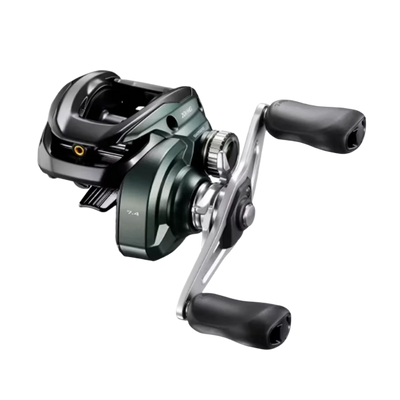
To match your powerful rod, you need a robust reel with a reliable drag and good retrieve. A casting set-up is preferred for this kind of fishing because it makes casting more comfortable and the reel will be sturdier. Depending on your preferences, however, you can also opt for a spinning reel (size 4000 to 5000, for example). In casting, size 200 reels are used up to 80 g and size 300 beyond that. The key is that it can handle the weight of the lures and the strength of a big pike in the fight. The reel ratio is worth pausing on: in winter, many anglers prefer a relatively slow ratio to match slow retrieves (for example a ratio of around 5:1, which brings in less line per handle turn and offers more torque). This kind of “slow” reel prevents you from retrieving too fast by accident and makes it easier to work lures gently. That said, a high-ratio reel (e.g. 7:1) is not a deal-breaker if you can control your retrieve, and it can even help you take up slack line quickly between two jerkbait animations. The essential thing is to have a mechanically solid reel, with a good-sized handle for torque, and a drag set around 3 to 5 kg to control a big fish that makes a run.
On the line side, braid is almost unavoidable for pike fishing with lures. Braid offers both sensitivity (no stretch, you feel the slightest bite) and high strength for a thin diameter. The braid diameter should be adapted to the technique and the weight of the lures. For lures between 30 and 80 g, use PE 3 braid (0.28 mm) in casting but PE 2 (0.23 mm) in spinning.
For lures up to 150 g, use PE4 braid (0.33 mm) to PE5 (0.37 mm). Heavier braids are used, especially in casting, because there is always a risk of a tangle on the cast and therefore of losing your lure if the braid snaps.
Leader: in every season you have to protect the line from those sharp teeth. Choose either a wire leader or a heavy fluorocarbon between 0.80 and 1 mm.
Example of a 20 to 80 g casting combo: WKS-MB739-1 IM rod + Curado 201 reel + Prodigy PE 3 braid + Prodigy lines 0.90 mm fluorocarbon.
Winter is not the season when pike will throw themselves at anything: you often have to keep at it and present a meal that is both easy to catch and appetising enough. Some types of lure excel in these conditions. Here are the main categories of lure to favour for winter pike, and how to use them well:
Soft lures fished deep
Soft lures are the most used lures in winter, because they let you fish slowly close to the bottom. There are several models, such as jointed lures, grubs (curly-tail shape) or shads (fitted with a vibrating paddle tail). They can be rigged on a jig head or on a shallow rig.
For example, a 23 cm HNTR shad worked on a slow, steady retrieve through a deep hole has every chance of being attacked.
Hard lures for slow actions
There are 3 categories of hard lure that stand out for winter pike fishing:
- Swimbaits: these multi-section hard lures let you fish slowly on a steady retrieve with a wide, banner-like action. By adding extra weight, you can make them run at whatever depth you want.
- Glidebaits: when you need to work a precise spot such as a current break, these 2-section jointed lures are a formidable weapon.
- Jerkbaits: when the weather is foul (wind and rain), it is time to bring out your jerkbaits. Jerks trigger pike strikes through irritation, notably thanks to the noise of the rattles.
For example, a KGB Chad Shad 180 is very effective with twitches for fishing current breaks, or on a simple steady retrieve for fishing large open water.
Choosing the right colour
In winter, the choice of lure colour can make the difference, because light and water clarity conditions vary a great deal. Broadly, two approaches are open to us: flashy, highly visible colours and natural colours. In low light (overcast sky, dusk) or in coloured water, flashy colours give excellent results. A great classic is the Firetiger pattern (a combination of chartreuse green, orange and black stripes): it is an aggressive, often UV colour that some anglers report as effective in 80% of winter situations. Likewise, white or chartreuse lures offer a strong contrast that draws a predator's eye, whether the water is clear or tinted. So do not hesitate to use highly visible lures in cold water, since “who can do more can do less”: a sluggish pike will be more easily triggered by a strong visual signal. Conversely, if the water is very clear and the weather sunny, pike can turn wary. In those conditions, natural colours take over: patterns imitating perch, roach or a bluish baitfish, translucent glittered colours, and so on. In bright winter sun over clear water, a lure in a natural colour (for example a greenish Ayu or a perch pattern) will often be more discreet and convincing for an old, educated pike. In short, in clear water and sun, favour natural; and in coloured water or low light, bring out the flashy colours (chartreuse, orange, Firetiger, white). And if you are unsure, a lure that is half natural, half flash (e.g. olive-green back, orange flank) can be a good compromise. The key is to give yourself every chance on the visibility front, because in winter the water is often tinted by rain and pike need to spot your lure from a distance.
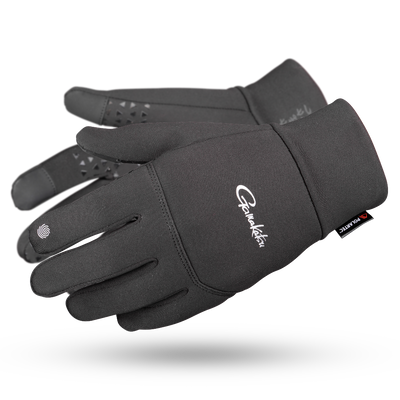
To enjoy your time at the water's edge, you need to fish comfortably and not get cold!
Gloves, a beanie and a warm jacket are the basic items for facing low temperatures.
A technique that divides anglers.
This technique, sometimes seen as “unsporting”, which consists of using a live bait, is deadly, especially in the winter period. As mentioned earlier, presenting a real fish as bait, still or barely moving, matches the pike's feeding habits in the cold season (it spends little energy to feed). A livebait correctly positioned on a float rig or a legered rig on the bottom can make the difference on days when pike ignore lures. Be sure to choose a livebait of a good size (an 80 cm pike will not move for a 5 cm small roach in the depths of winter, so favour a lively 15 to 20 cm bait).
You can also use a dead fish, which releases its scent into the icy water and draws in nearby pike. Watch your rods carefully to prevent the pike from swallowing deeply, and strike on the very first bite. You can also fit a “swinger” to detect “drop-back” bites. But in itself, winter livebait is one of the most productive methods for pike, especially on the precise spots you have identified (a pike “settled” in its hole will not resist an easy meal for long). Note that dead sea fish such as mackerel, sardines or scad are devastatingly effective thanks to the scent they give off.
Winter pike fishing is certainly demanding, but it can offer fantastic rewards. Let us recap the key points to remember: find the pike where they take refuge (deep, sheltered zones, close to the baitfish), use suitable gear (a powerful and sensitive rod, a reliable reel, heavy braid and a wire or fluoro leader, lures chosen to fish slowly and deep), and apply slow, considered techniques (slowed-down animations, long pauses, careful spot selection according to the weather). Do not forget the practical aspects either: dress well against the cold and respect the safety rules and regulations.
With perseverance, winter can truly give you access to the biggest pike of the year. It is often in this season that metre-plus specimens let themselves be tempted, while countless anglers stay warm at home. Every session is a lesson, and every bite wrenched from the heart of winter is a small victory, one that can turn into an unforgettable trophy when a big pike ends up in your net. So arm yourself with your best lures (and your gloves!), apply this advice, and you will see that winter pike fishing is far from an impossible mission. On the contrary, it has something magical about it: calm landscapes, waters often deserted by other anglers, and the satisfaction of catching Mister Esox when the conditions are stacked against you. Enjoy your winter fishing, and make the most of every moment at the water's edge, the reward will only be sweeter at the end of the line!





Comments
0Log in to leave a comment.
Log in